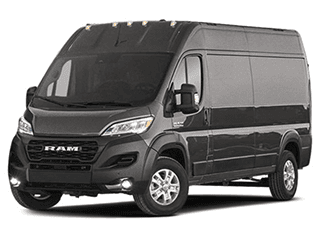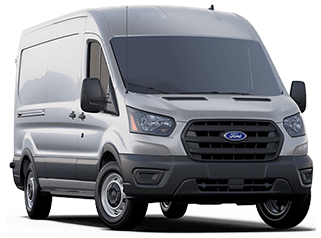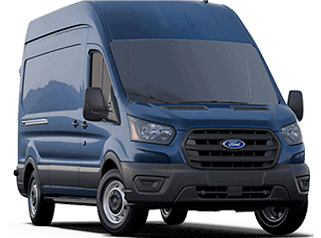
Walter
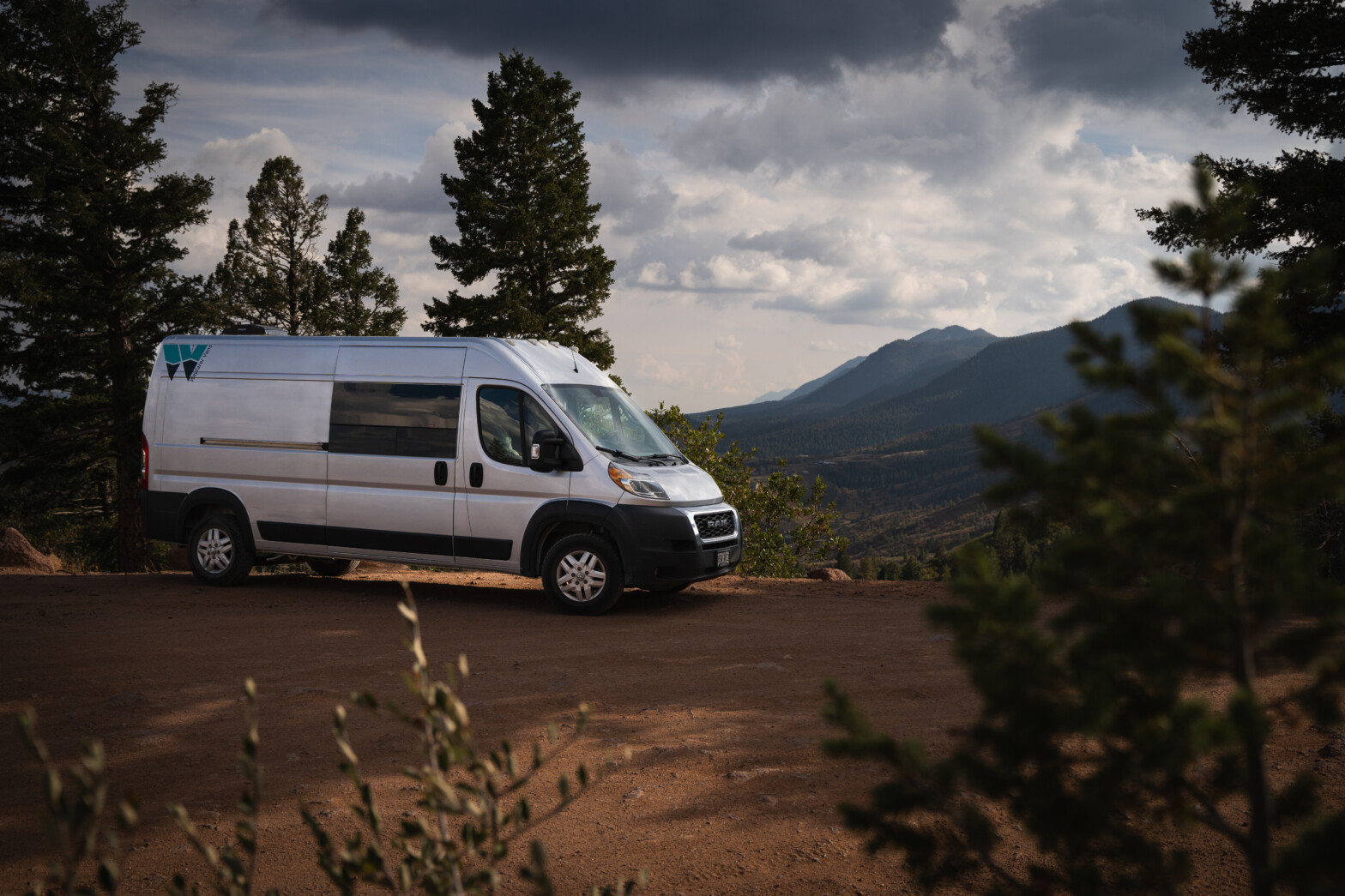
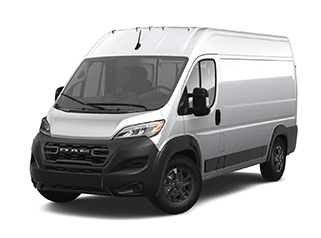
RAM ProMaster
136″ WHEELBASE, HIGH ROOF

Building your own camper van can be a rewarding project, especially if you enjoy working with your hands and want to create something completely your own. But is a DIY camper van conversion actually worth the time, money, and effort?
The short answer: A DIY camper van build can be a great option if you have the skills, tools, time, and patience to tackle it. But if your main goal is to get out and travel, a professionally built camper van conversion might be a better fit. DIY projects often take longer and cost more than expected, especially when you factor in tools, materials, mistakes, and the time spent learning as you go.
And we get it. Why should you take our advice when we’re in the business of selling camper vans? We’ve met plenty of people who tried the DIY route for their first camper van, then came to us for their second because they didn’t want to tackle another build themselves. Believe it or not, many members of the Wayfarer Vans team built their own camper vans, trailers, or truck toppers before joining us. In fact, that hands-on experience is part of the reason we hired some of them!
One of those team members is Kaylene, who, along with her husband, Elliot, has spent the past seven years building, using, and rebuilding their own camper van. Between traveling with their dogs and cat, hauling mountain bikes, and making room for all their outdoor gear, they’ve learned a lot about what works in a camper van and what doesn’t. We sat down with them to talk about what they’d do differently and what they’d tell anyone considering a DIY build.
Building your own camper van can cost less than working with a professional conversion company, but DIY doesn’t automatically mean cheaper. How much you save depends on your design, the materials you choose, the tools you already own, and how much work you’re comfortable doing yourself.
It’s easy to look at the price of lumber, insulation, and a few cabinets and think you’ll save a bundle by building everything yourself. But those costs can add up pretty quickly once you factor in tools, electrical components, hardware, wasted materials, and the occasional project you have to redo because something didn’t fit quite right.
And then there’s your time to consider. If you love tinkering and building things, spending your weekends working on a van might be half the fun. But if you’re building a camper van because you want to spend more time camping, biking, or exploring, it’s worth thinking about how many weekends you’re willing to spend in the driveway instead.
Of course, not everyone puts a dollar value on their free time, especially if building things is something they genuinely enjoy. But it can be eye-opening to see what those hours might be worth. Here’s how they add up if you value your time at $50 an hour and spend 16 hours each weekend working on your van.
| Hours spent building | Value of your time at $50/hour | Potential weekends spent not adventuring |
| 100 hours | $5,000 | 7 |
| 200 hours | $10,000 | 13 |
| 300 hours | $15,000 | 19 |
| 500 hours | $25,000 | 32 |
That doesn’t mean you’re actually spending that money. But it is worth considering what else you could do with those hundreds of hours, whether that’s spending time with family or getting out and enjoying the camper van you wanted in the first place.
A DIY camper van conversion can range from a basic, low-cost camping setup to a project costing tens of thousands of dollars. The total amount depends on how elaborate you want the build to be, especially when it comes to electrical systems, cabinetry, heating, and plumbing.
Kaylene and Elliot are a good example of how those costs can add up over time. They purchased a used 2008 Dodge Sprinter and started out with little more than a mattress thrown in the back. As they traveled and figured out what worked for them, they gradually added storage, a raised bed, and other features. Eventually, they decided to rebuild the interior with a more functional layout, an upgraded electrical system, and better storage for their mountain bikes and gear.
Between the original build and the second version of the same van, they estimated spending approximately $30,000 on materials alone, not including their labor or the tools they already owned. And it’s not just the big purchases that add up. Elliot estimated that their new bed system alone required 200 to 300 screws and bolts.
For comparison, Wayfarer Vans offers professionally built camper van conversions starting at $22,500, not including the vehicle. Your final price depends on the van model, layout, and accessories you choose. These aren’t identical projects or directly comparable budgets, but their experience shows why it’s worth pricing out a complete DIY build before assuming it will be the less expensive option.
Financing is another factor worth considering. Depending on the vehicle, conversion, and lender, you may be able to finance a professionally converted camper van through a traditional auto loan or an RV loan. With a DIY build, financing the materials and construction can be trickier, and you may need to explore options such as a personal loan.
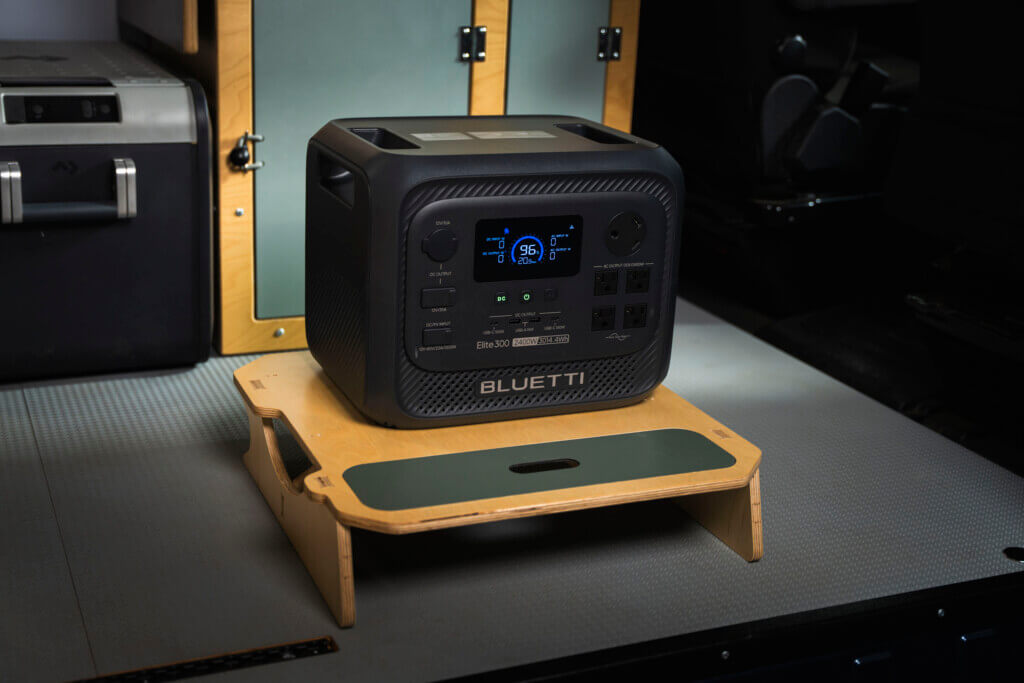
BLUETTI power stations are our go-to for easy power.

Stay warm with a Propex heater.

We like to keep our plumbing simple so you can focus on adventures. Not repairs.
A DIY camper van conversion can take anywhere from a few weekends to well over a year, depending on the complexity of the build and how much time you can dedicate to it. If you’re working full-time and squeezing in projects on evenings and weekends, there’s a good chance the build will take longer than you originally planned.
Kaylene and Elliot know that firsthand. Both worked full-time while tackling their second build, and more than a year after starting, they’d already put in over 200 hours and estimated they were only about 70% finished. As Elliot put it, “Everything when you’re building a van takes 10 times as long as you plan for it to do.”
And it’s not just the actual construction that takes time. There’s plenty of research involved in figuring out which products to buy, learning new skills, tracking down supplies, and troubleshooting the things that inevitably don’t go according to plan.
For comparison, at Wayfarer Vans, we build all the components of your conversion before your van arrives. That allows us to install everything in just two to three days once your van arrives, and that allows you to spend more time actually using your van.
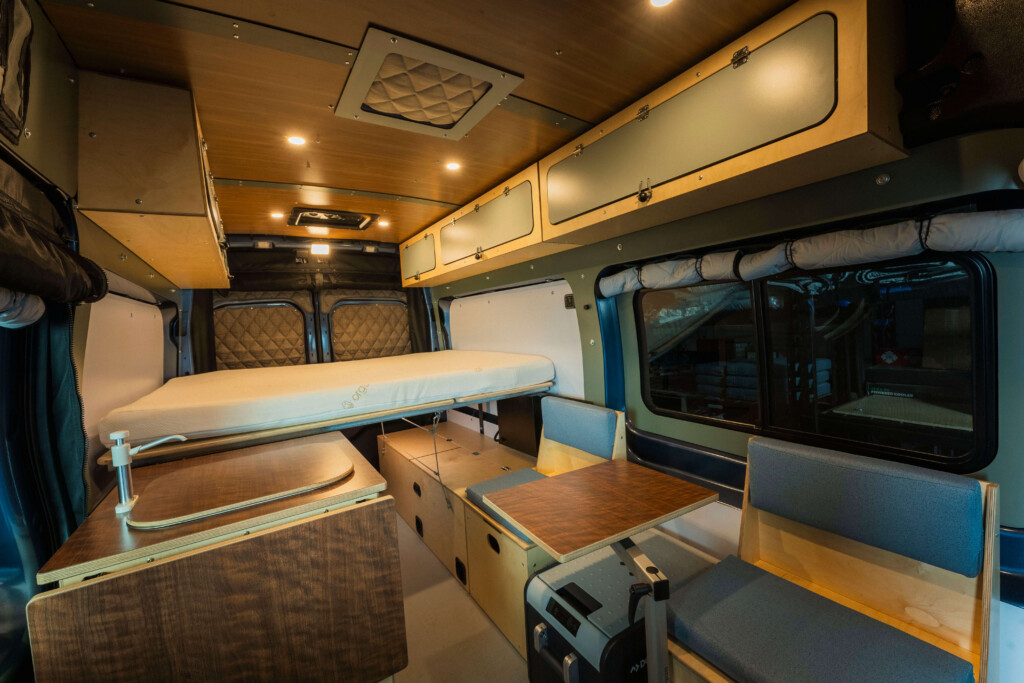
Our Wilford conversion, that’s a 148″ Ford Transit High Roof, is great for taller travelers.
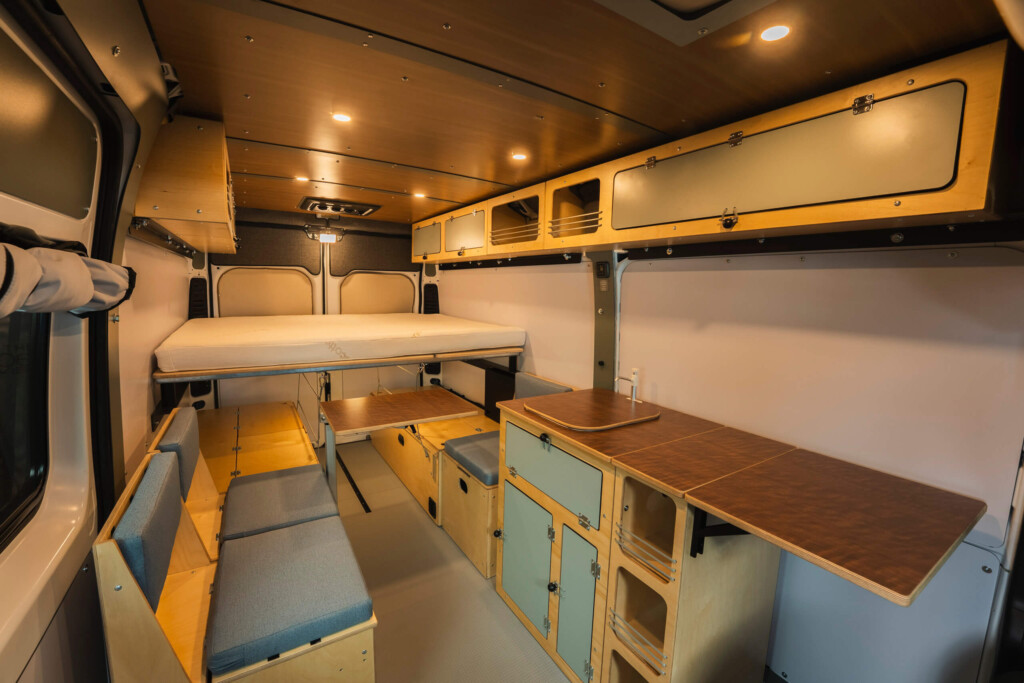
Our Walt conversion, that’s a 159″ wheelbase RAM, is perfect for the traveler who needs all the space.
You don’t need to be a professional contractor to build your own camper van, but having some experience with carpentry, electrical work, and power tools will certainly make things easier. You’ll also need plenty of patience and a willingness to learn a few new skills along the way.
Even with his background in construction, Elliot found that building inside a van came with challenges he hadn’t anticipated. Unlike a house, a van has curved walls, uneven surfaces, and tight spaces that make even relatively simple projects more complicated. Building cabinets, installing wall panels, and fitting furniture often require a lot of measuring, cutting, and adjusting to get everything to fit just right.
And there’s more to a camper van conversion than woodworking. Depending on your plans, you might also find yourself learning how to install insulation, roof fans, windows, electrical systems, heating, and plumbing. Some of those projects, particularly electrical work and fuel-burning heating systems, require specialized knowledge to install safely.
Of course, learning new skills can be one of the most rewarding parts of a DIY project, and there are plenty of resources out there to help you along the way. But if the thought of figuring out electrical wiring or cutting a hole in your van’s roof makes you a little nervous, there’s nothing wrong with leaving those jobs to someone with more experience.
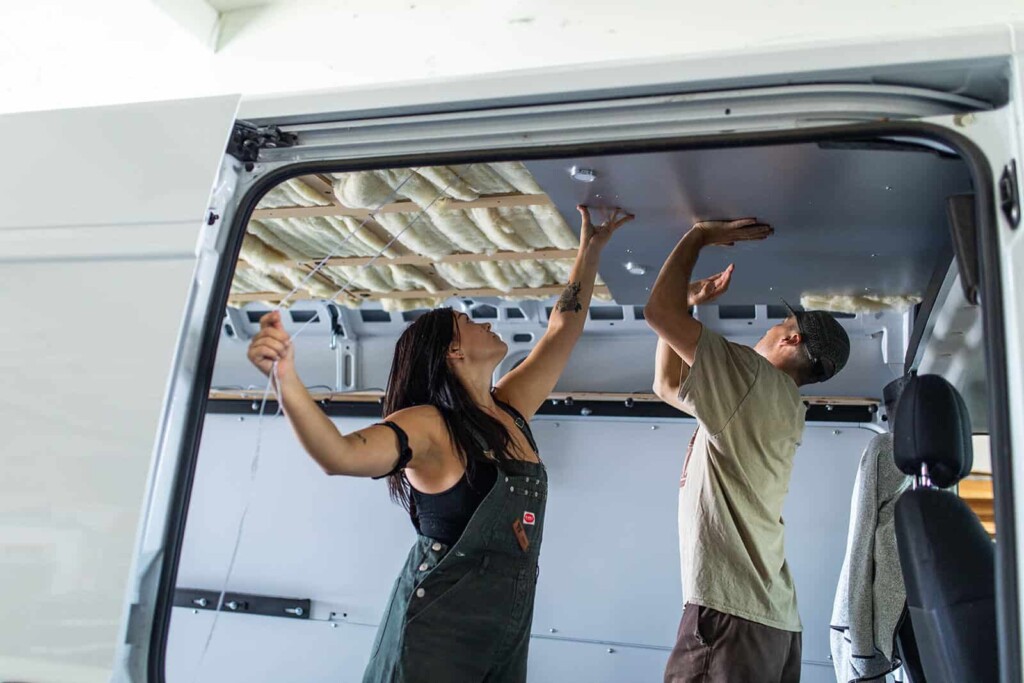
Building your camper van can teach you many great skills!

If the thought of slicing into your own van makes you nervous, leave it to the pros! They do this almost every day.
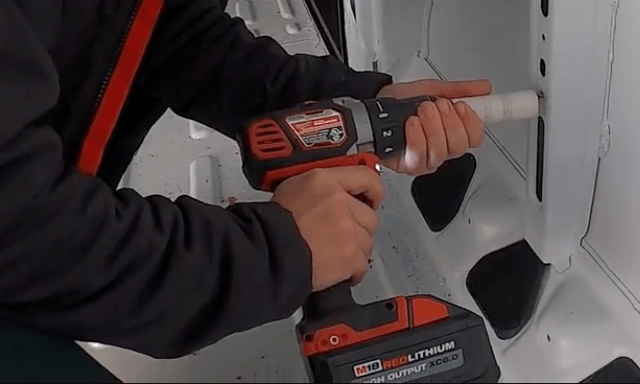
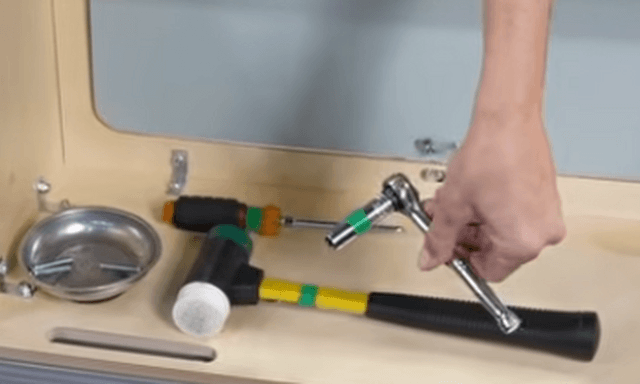
Most DIY camper van builds require a mix of power tools, hand tools, and specialty equipment, along with a safe place to work on your van. If you’re starting from scratch without many tools, you could easily spend thousands of dollars just getting everything you need.
Kaylene and Elliot had a head start because they already owned many of the tools they needed, including saws, drills, electrical crimpers, wire cutters, and meters. But if you’re starting without a well-stocked toolbox, getting everything you need can be a significant expense. And it’s not just the big purchases. Replacement drill bits, saw blades, specialty hardware, and those inevitable trips to the hardware store can add up throughout a build.
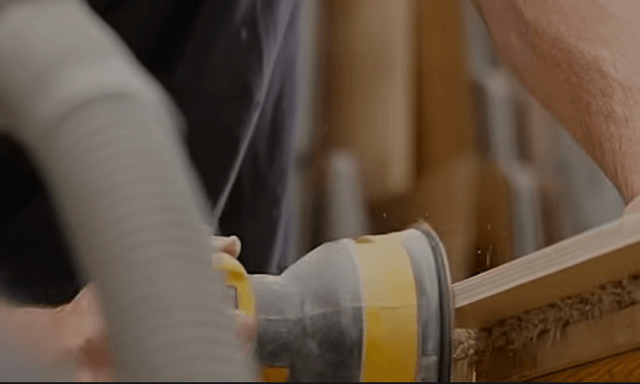
You’ll also need somewhere to work on your van, and ideally, somewhere you can leave your tools and materials between projects. Kaylene and Elliot didn’t have a dedicated shop, so much of their construction happened in their driveway or on the street. Living in Colorado meant working around snow, summer heat, and whatever else the weather threw their way.
You don’t necessarily need a garage or workshop to build a camper van, but having a covered workspace can make the process a whole lot easier, especially when a weekend project stretches into several weeks.
Some of the biggest DIY camper van mistakes come from designing the interior before you know how you’ll actually use it, underestimating the work involved, and choosing materials that are difficult to change later.
When Kaylene and Elliot first started building their van, they had visions of a beautiful, Pinterest-worthy camper van. But as they started traveling with two large dogs, a cat, multiple mountain bikes, and plenty of outdoor gear, they quickly learned that what looks great in photos doesn’t always work so well in real life. Their first build became a work in progress as they raised the bed to make room for bikes, added storage, and adjusted the layout to better fit their adventures.
By the time they started their second build, they had a much better idea of what they actually needed. They’d also learned a few lessons about materials, including one they wouldn’t use again: spray foam insulation. Removing it to make changes to their van turned into a much bigger project than expected. They eventually switched to Havelock wool insulation, the same material we use at Wayfarer Vans, which worked better for their needs.
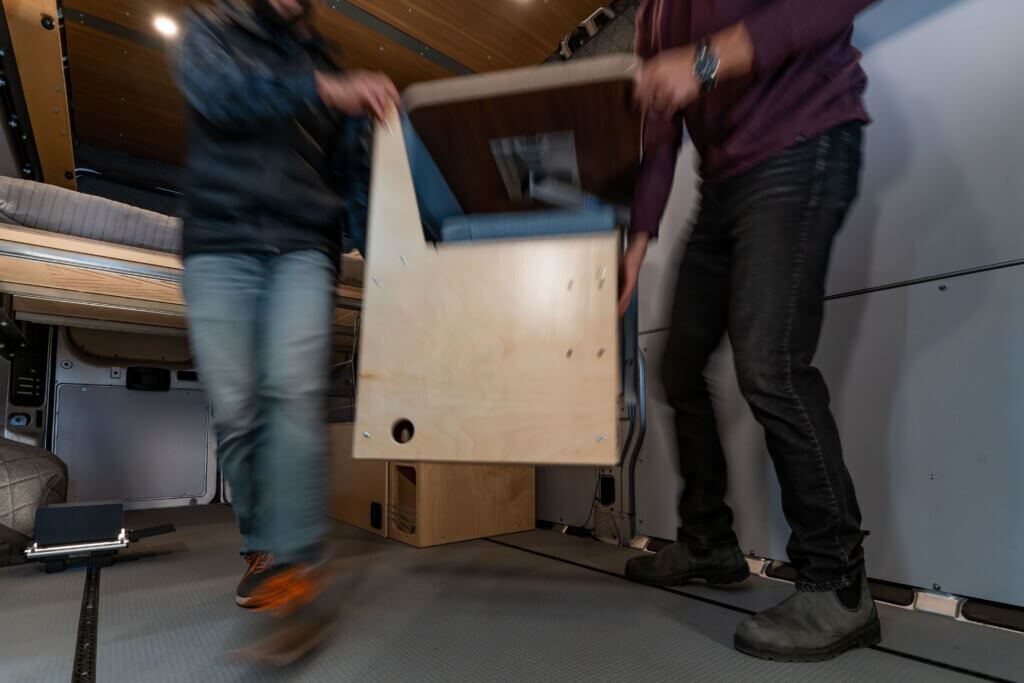
Their biggest takeaway? Think about how your needs might change before committing to a permanent layout. Maybe you’ll pick up a new hobby, start traveling with pets or kids, or decide you need more room for gear. That’s one of the reasons we designed Wayfarer Vans conversions to be modular. Instead of building everything permanently into place, you can move and reconfigure much of the furniture with just one wrench. So when your adventures change, your camper van can change with you.
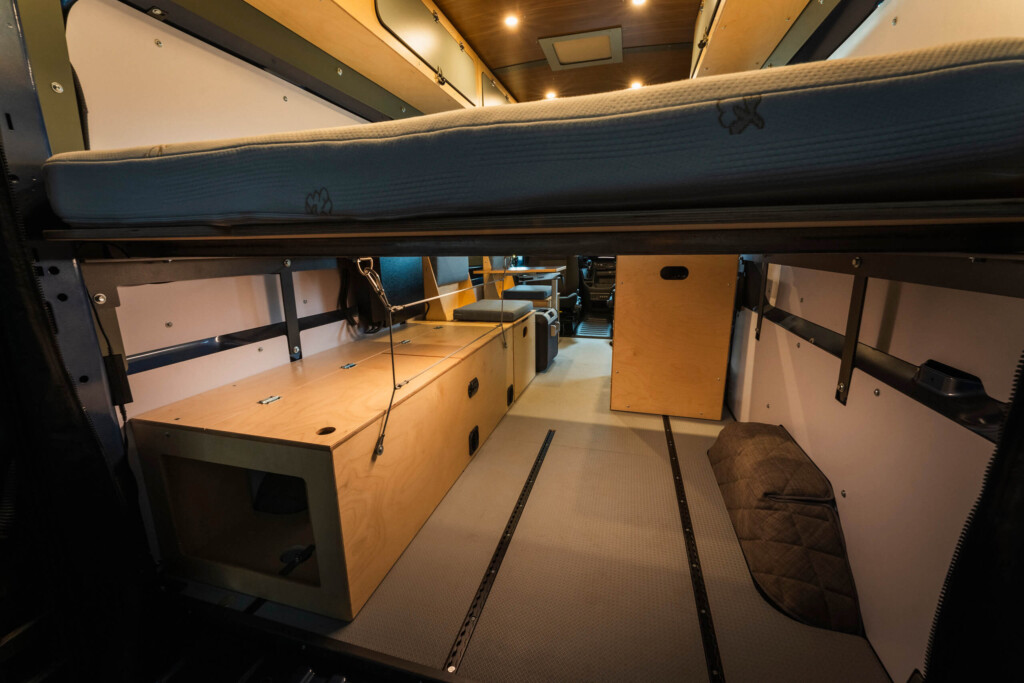
L-track on the floor helps give Wayfarer Vans its signature modularity.
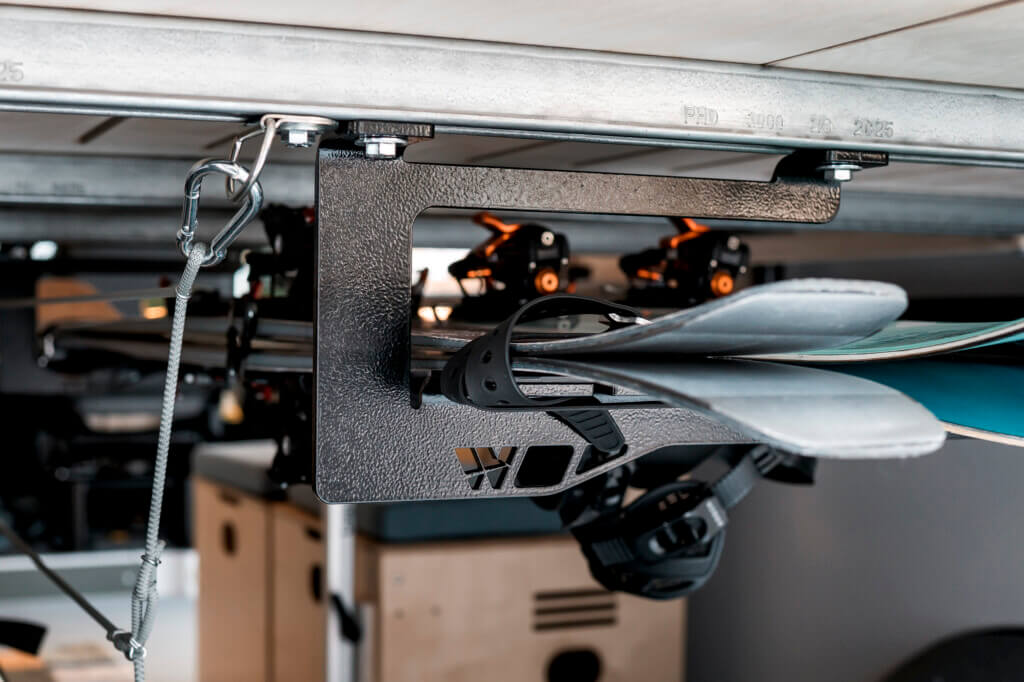
Unistrut under the bed helps make sure no space is wasted.
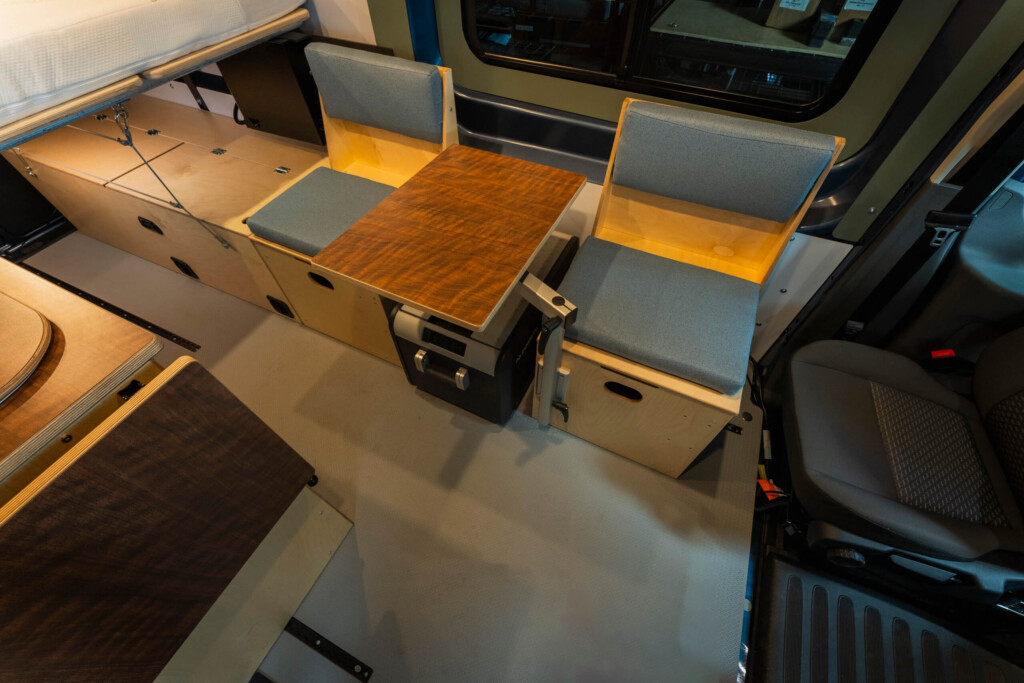
Rearrange your furniture into a layout that works best for you.
A DIY camper van can absolutely be safe when it’s properly designed and built, but certain parts of the conversion require extra care, especially electrical systems, propane, ventilation, and plumbing. Mistakes in these areas can create serious safety hazards or lead to expensive repairs down the road.
Kaylene and Elliot learned this firsthand, particularly when it came to their electrical system. Elliot described the wiring in their original build as “sketchy, to say the least.” When they rebuilt the van, they took a much more thoughtful approach to the electrical system, adding fuses, shutoffs, and other safety controls they’d learned were important along the way.
That’s one of the bigger responsibilities that comes with DIY. You’re not just choosing which components to install; you’re also responsible for understanding how they work together and making sure everything is installed safely. The same goes for propane, heating, ventilation, and any openings you cut into the van’s roof or walls. If you’re not experienced with electrical or fuel-burning heating systems, it’s worth having a qualified professional handle those installations, even if you’re tackling the rest of the build yourself.
One advantage of choosing a professional camper van conversion is that you’re getting an established design installed by a team that’s familiar with the materials and systems they use every day. At Wayfarer Vans, we also intentionally keep our systems simple, with fewer complicated components to operate and maintain once you’re out on the road.
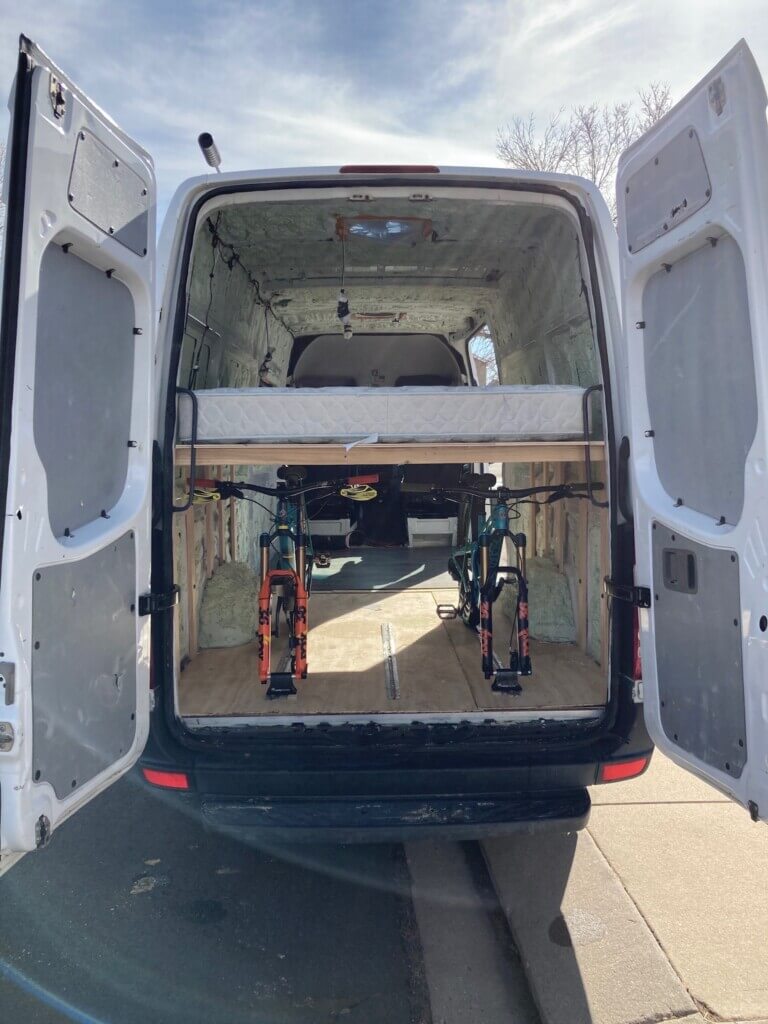
Building your van means you can customize it for your hobbies.
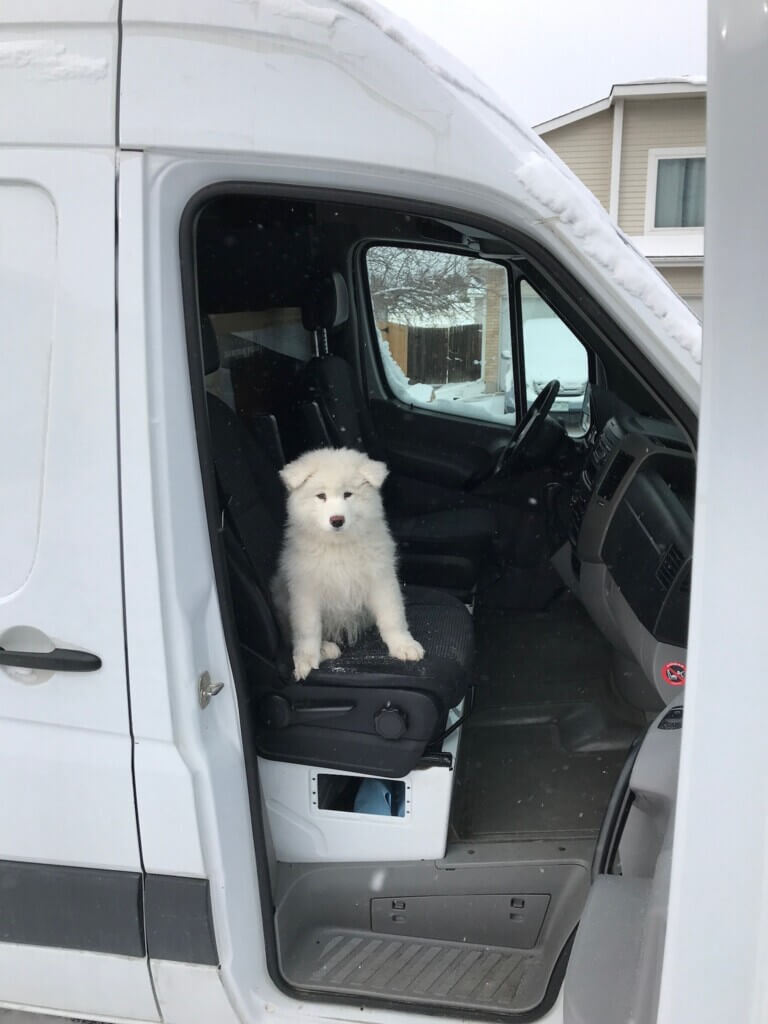
Ullr grew up to be our Chief Door Greeter. But has never stopped caring about safety.
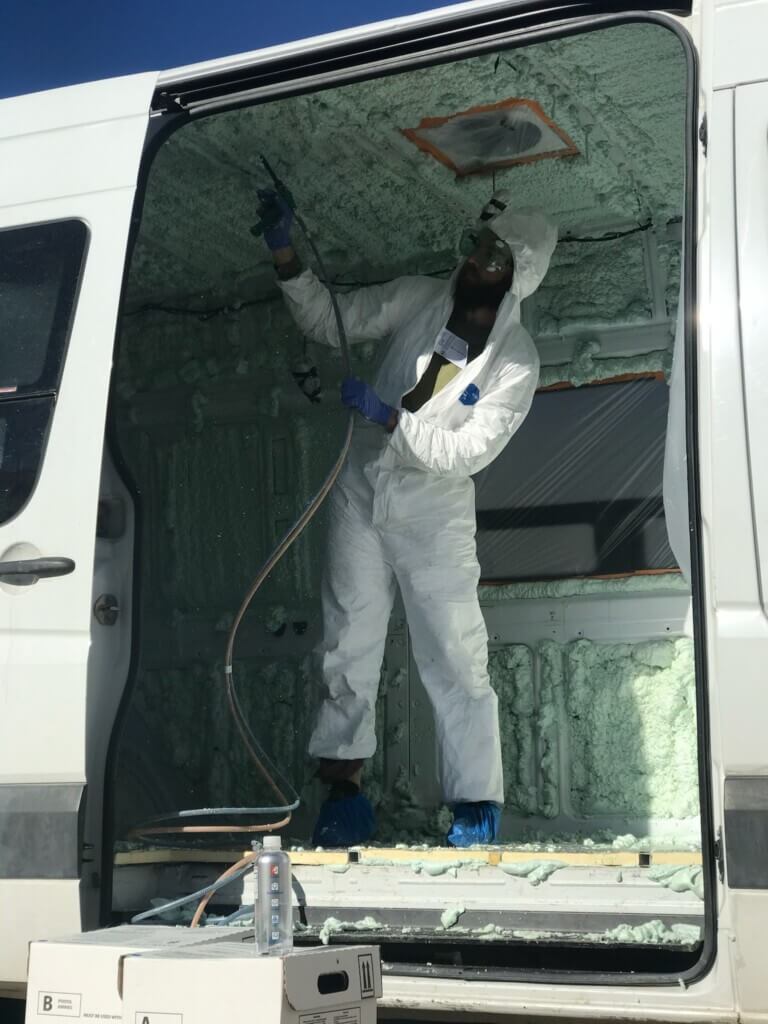
DIY builds often come with wardrobe updates.
A built-in bathroom or shower can be convenient, but it also takes up valuable interior space and adds plumbing, water storage, and maintenance to your camper van. For many campers, a simpler setup without a permanent bathroom makes more sense.
If you’re planning a DIY build, it’s worth thinking carefully about whether you’ll actually use a permanent shower enough to justify the space and work involved. Kaylene and Elliot talked about this during our webinar, especially the challenges that come with plumbing, winterizing water systems, and dealing with leaks. Kaylene shared a story about her dad’s camper van, where a leaking shower caused enough damage that they had to tear out and rebuild part of the interior. It’s a good reminder that adding a shower isn’t just about finding room for it. You also have to think about waterproofing, drainage, and what happens if something goes wrong.
At Wayfarer Vans, we’ve intentionally chosen not to include built-in bathrooms or showers in our conversions. We’d rather give you more room to move around, store your gear, and enjoy your van without worrying about complicated plumbing or winterizing a bunch of water lines. We do offer a portable toilet accessory, and many Wayfarians use campground facilities, public restrooms, or portable showers when they’re on the road.
Both new and used cargo vans can be great options for a camper van conversion. Buying used can save you money upfront, while buying new gives you a fresh start without having to worry about how a previous owner maintained the vehicle.
Kaylene and Elliot went the used route, purchasing their Sprinter with approximately 130,000 miles on it. Unfortunately, not long after bringing it home, they discovered a major oil leak that resulted in about $7,000 in engine repairs. That unexpected expense made them understandably hesitant to invest more money into the conversion until they felt confident the van would be reliable.
Of course, their experience doesn’t mean you should avoid buying a used van. There are plenty of great used vehicles out there, and buying one can be a smart way to keep your overall camper van budget down. Just be sure to do your homework, review the maintenance history, and have a qualified mechanic inspect the vehicle before you buy. After all, even the nicest camper van interior won’t do you much good if the van itself isn’t running!
At Wayfarer Vans, we convert both new and used Ford Transit and RAM ProMaster cargo vans. If you’re considering a used vehicle, our Journey Architects can help you understand which models qualify for our conversions and what to look for as you shop.
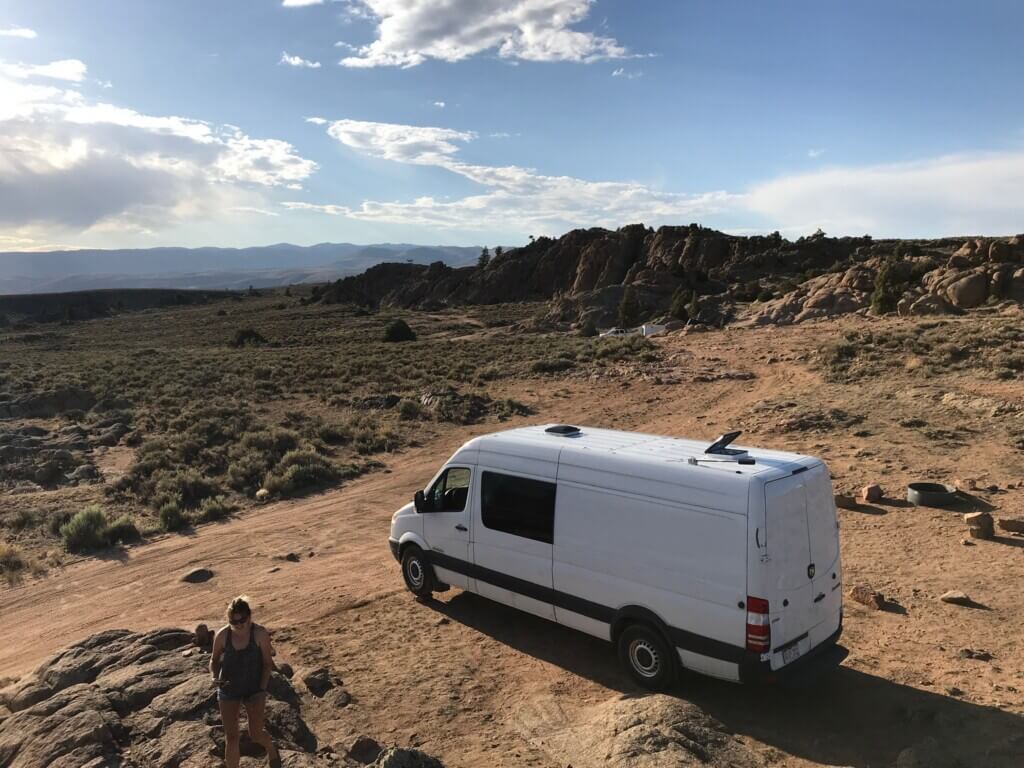
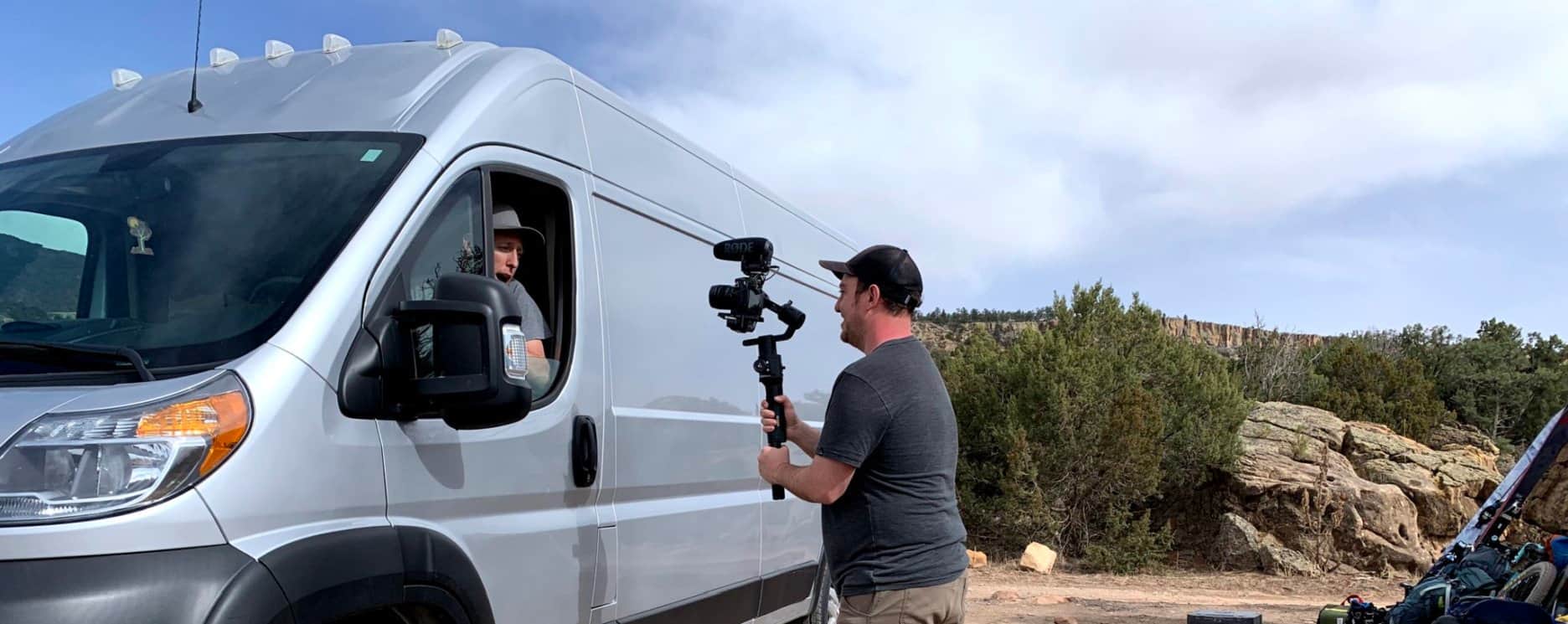
Kaylene’s used van out in the wild!
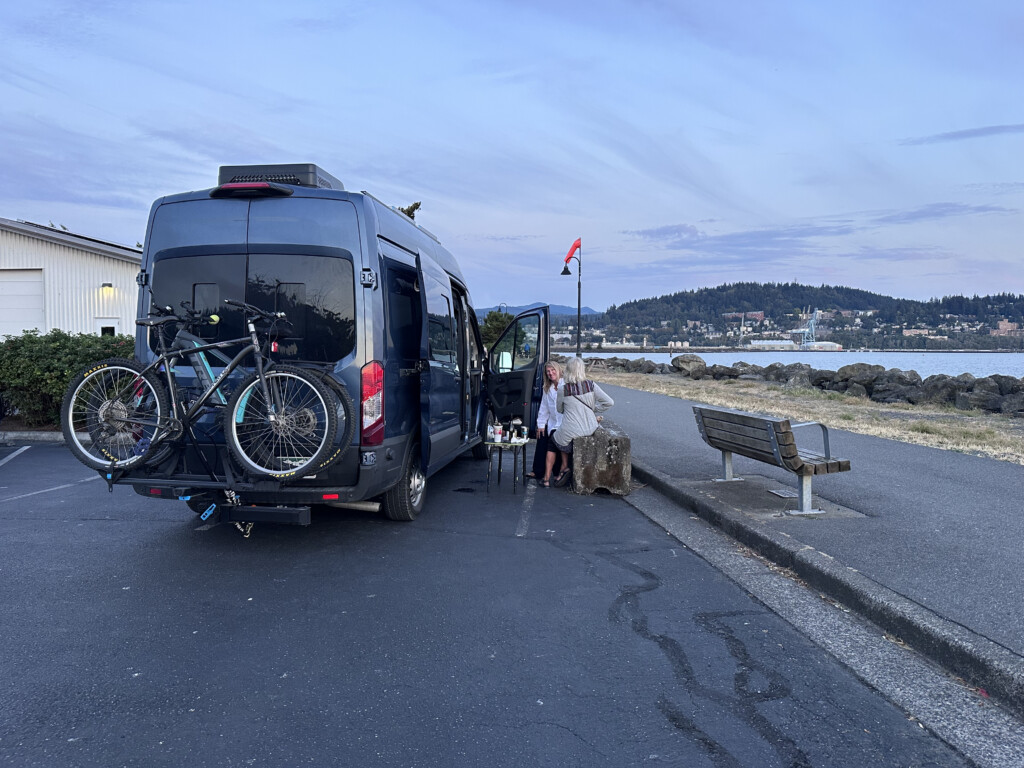
Wayfarer Vans conversion out in the wild!
A professional camper van conversion can save you time, simplify the building process, and give you access to experienced support long after your van is finished. For most DIY builders, it’s their first time converting a van, which means learning as they go. With a professional conversion, you benefit from all the vans that came before yours. At Wayfarer Vans, we’ve built and installed more than 1,300 conversions, learning from each one and continually refining our designs, materials, and installation process.
At Wayfarer Vans, we’ve built our conversions around a pretty simple idea: camping should be easier, not more complicated. We focus on making vans comfortable, practical, and easy to use without adding a bunch of features that require extra maintenance or take up valuable space.
Here’s what that looks like:

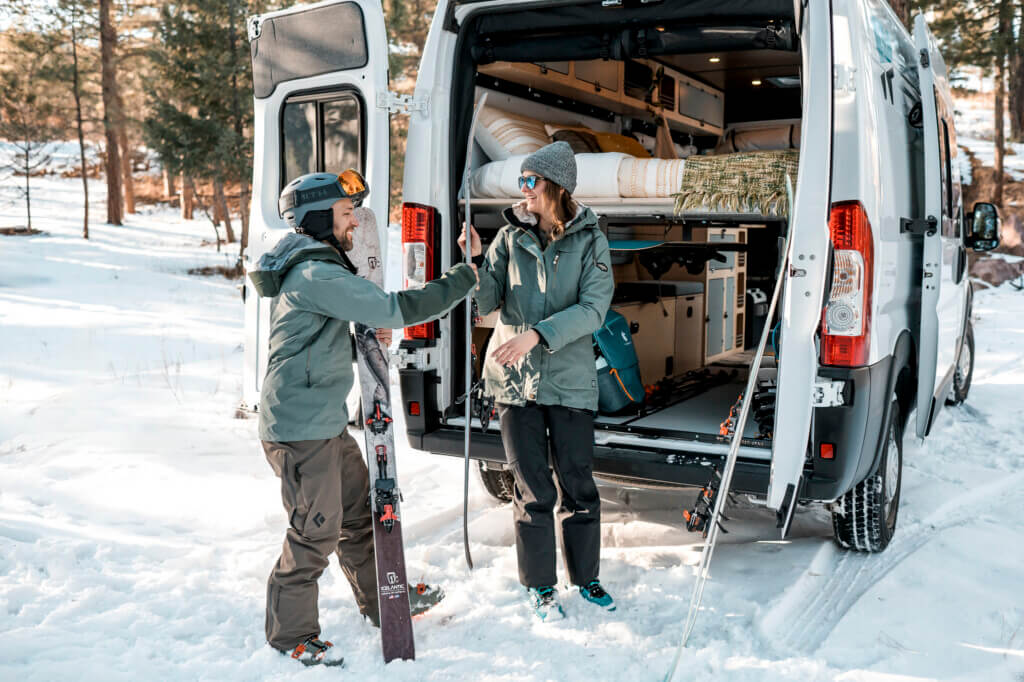
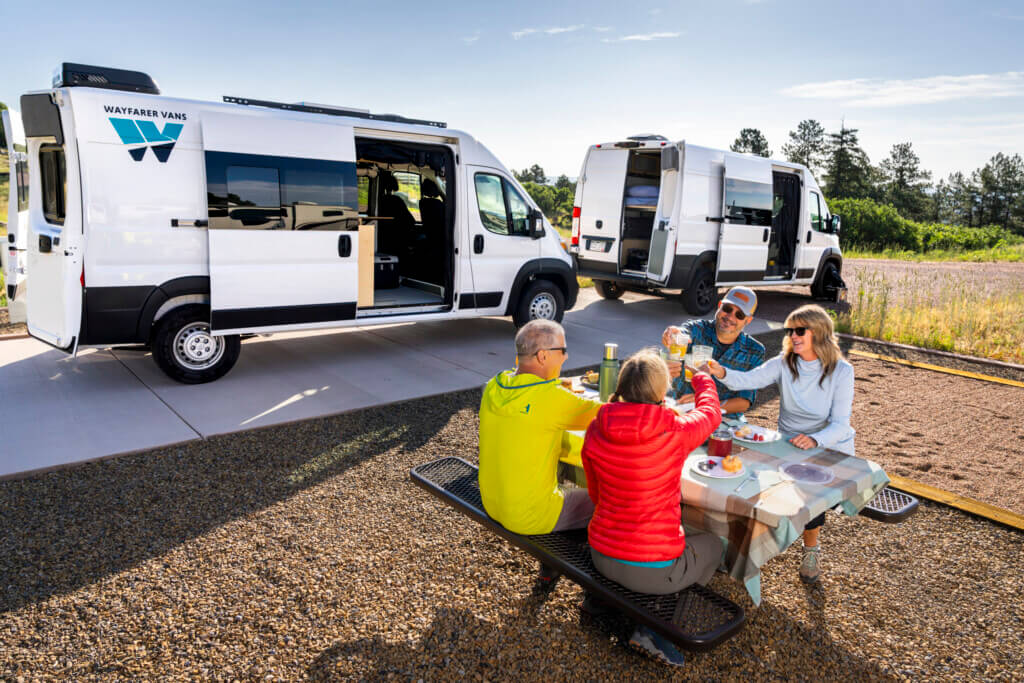
A Wayfarer Vans conversion can be done in just a few days, so you can maximize your adventure time.
Building your own camper van gives you complete control over the design, the opportunity to learn new skills, and the satisfaction of creating something with your own hands. For people who enjoy building and tinkering, the process can be just as rewarding as the adventures that follow.
There are some great reasons to take the DIY route, especially if:
Kaylene and Elliot are a great example. Even after all the unexpected expenses, long weekends, and projects that didn’t go according to plan, they don’t regret building their own van. They created something uniquely theirs, learned a ton along the way, and have plenty of stories to tell because of it.
If you enjoy the process of building things, a DIY camper van can be a pretty incredible project. Just make sure you’re as excited about the building part as you are about the camping part!
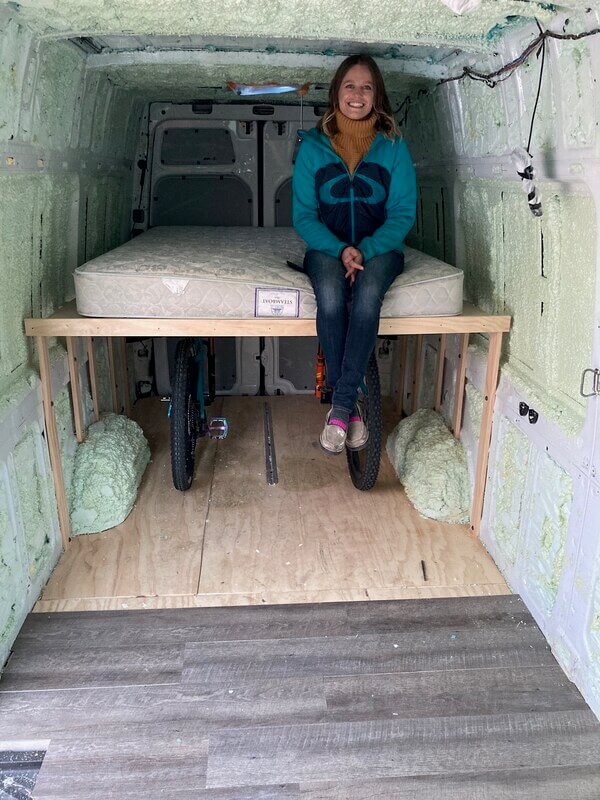
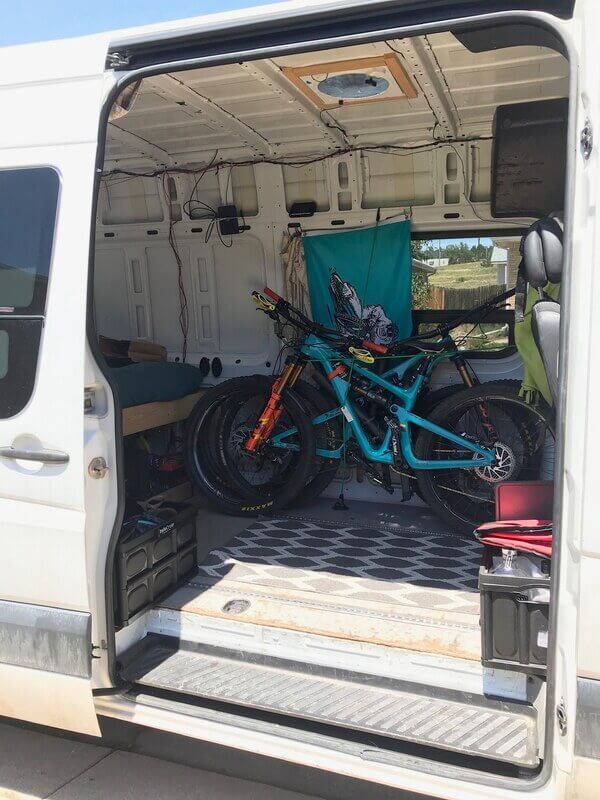
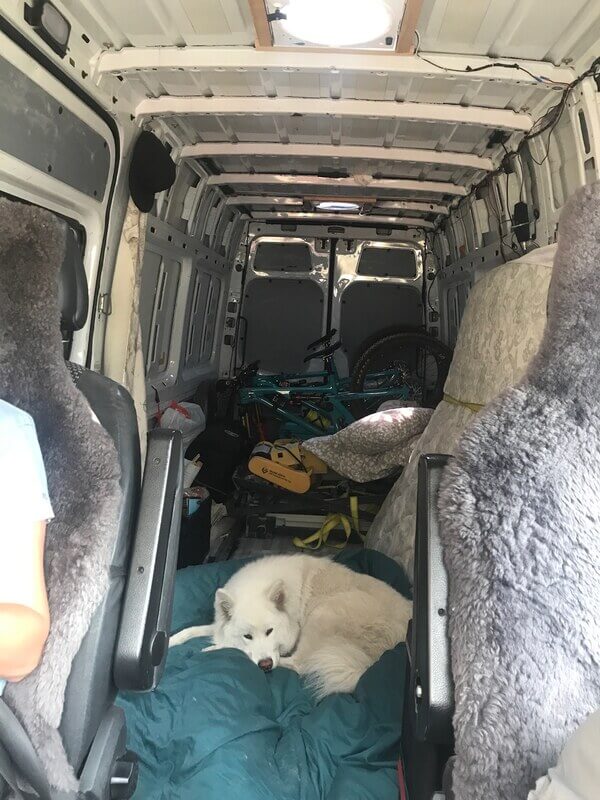
Kaylene and Elliot loved their van build process!
Yes! Many professional camper van conversions offer customization, although the amount of flexibility varies by builder. Some companies specialize in fully custom interiors, while others offer established layouts with options for different configurations and accessories.
At Wayfarer Vans, we’ve chosen to offer a modular system rather than design every interior from scratch. You can choose from compatible layouts and accessories when you order your conversion, but the flexibility doesn’t end there. If you need more room for gear, want to change your sleeping setup, or simply find a better way to use your space, you can rearrange much of the furniture later using just one wrench.
That’s an important distinction between customizing a van before it’s built and being able to make changes after you’ve used it for a while. Kaylene and Elliot learned that their first ideas weren’t necessarily the ones that worked best once they started traveling with their pets, bikes, and camping gear.
You might know exactly what you want in a camper van today, but it’s nice to have options if your plans change a few years down the road.
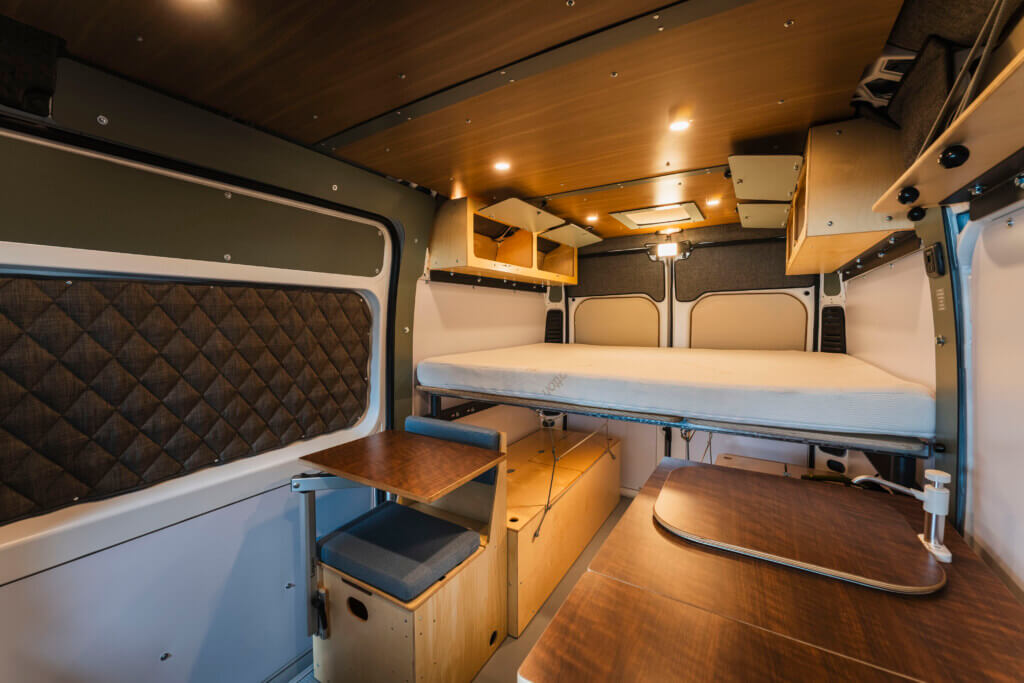
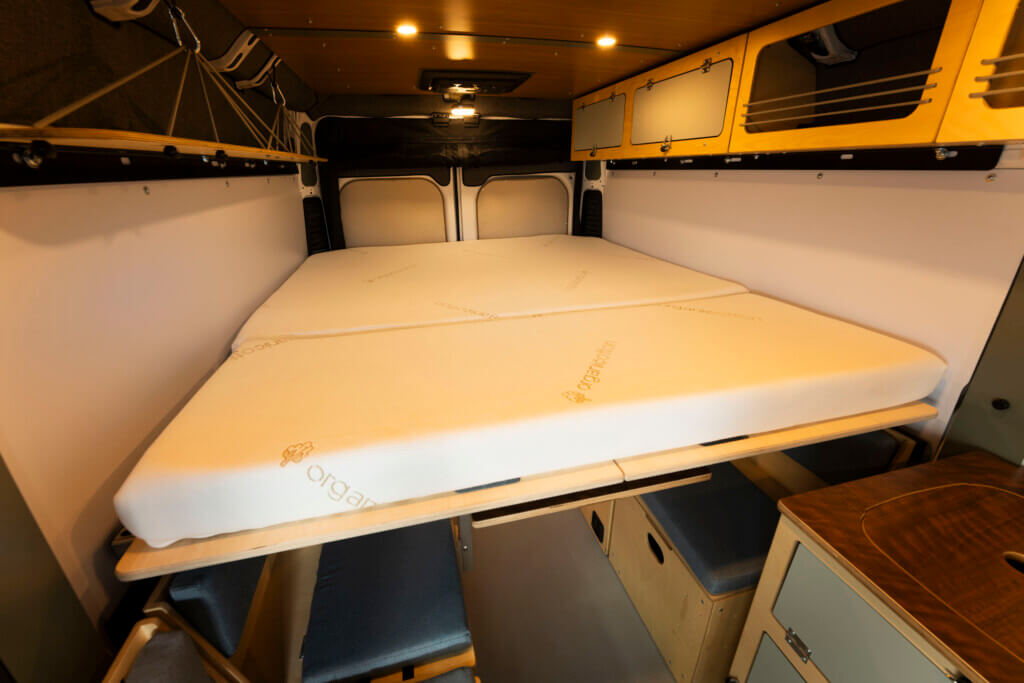
The best choice comes down to your skills, budget, and how you want to spend your time. If you love hands-on projects, enjoy learning new skills, and want complete control over every detail, building your own camper van might be exactly what you’re looking for. But if your goal is to get out and explore without spending months working on a van, a professional conversion may be a better fit.
After seven years of building and rebuilding their own camper van, Kaylene and Elliot have experienced both the rewards and challenges of DIY. Based on what they’ve learned, here’s how building your own van compares with choosing a Wayfarer Vans conversion.
| DIY camper van | Wayfarer Vans conversion | |
| Cost | Can cost less, depending on materials, tools, and design | Know the cost of your conversion upfront, including the accessories you choose |
| Time | Requires research, construction, and troubleshooting | Conversion takes 2-3 days |
| Skills and tools | You’ll need to supply or learn the skills and acquire the necessary tools | An experienced team handles construction and installation |
| Customization | Full control over the design and features | Wayfarer offers standardized layouts, modular designs, and accessories to fit your needs. |
| Warranty and support | You’re generally responsible for troubleshooting your own work | Wayfarer backs its conversions with a comprehensive warranty and ongoing support from its team |
After seven years of building, rebuilding, and traveling in their camper van, Kaylene and Elliot don’t regret taking the DIY route. They learned a lot along the way and created a van that worked for their adventures. But when asked whether they’d do it all over again, Elliot admitted they might take a different approach. He said they’d probably consider something more turnkey, like a Wayfarer Vans conversion, and then make smaller adjustments to fit their lifestyle.
There’s no wrong answer if you know what you’re getting into. For some people, building the van is part of the fun. For others, the whole point of having a camper van is to spend more time camping, biking, and exploring. The important thing is choosing the approach that gets you more of what you love.
If you’d rather skip the DIY build, we’d love to help you explore your options. Our Journey Architects can walk you through Wayfarer Vans models, layouts, accessories, and pricing, including conversions for compatible new and used cargo vans.