Camping with kids can be hard. But so is parenting them at home, so you may as well pack up the van and make some memories along the way. Here are some of our proven tips for making it (sort of) work at every age.
Infants (the first year)
Camping goal: Keep it simple and safe. Build routines and confidence for yourself that you can get out and go on adventures with your little ones.
- Stick close to home, especially in the first months. Rather than pushing your limits, keep it simple with a reservable campsite at your local state park, or even a driveway campout to test your setup. It’s always helpful to know where the nearest medical center is, and save your pediatrician’s phone number in case the need arises.
- Take your normal packing list for an outing with your baby, and add extra of everything. Clothes, diapers, wipes, warm layers, food. Extras rarely get used, but can save the day when everything goes sideways. You’ll be glad you have them on hand.
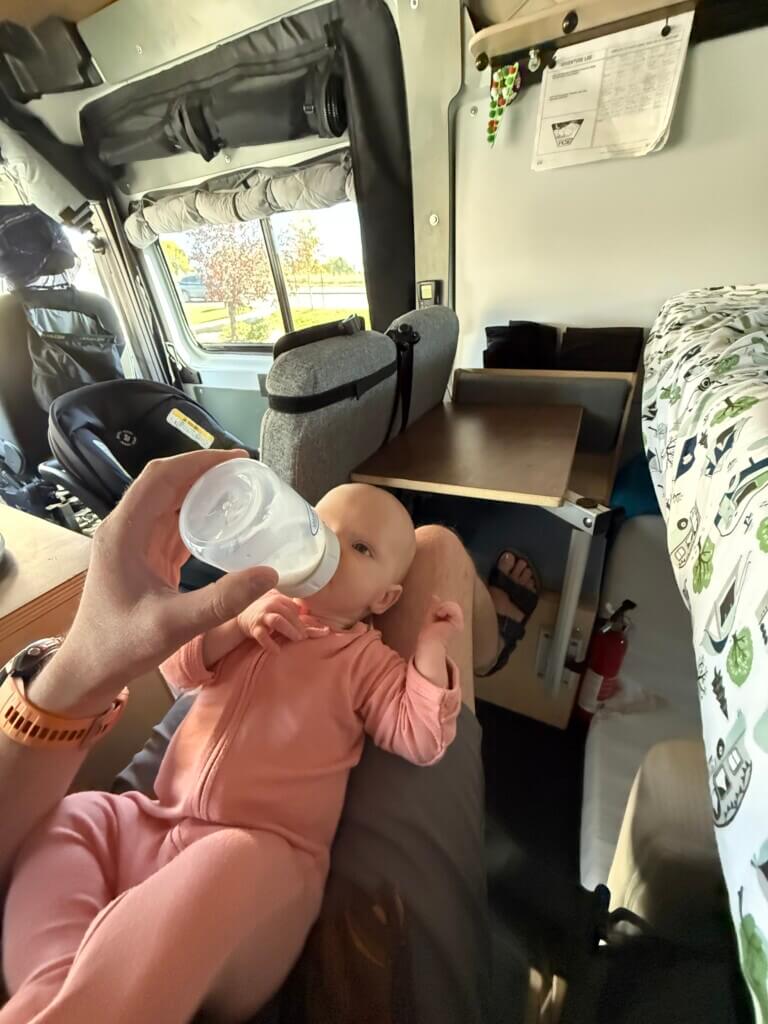
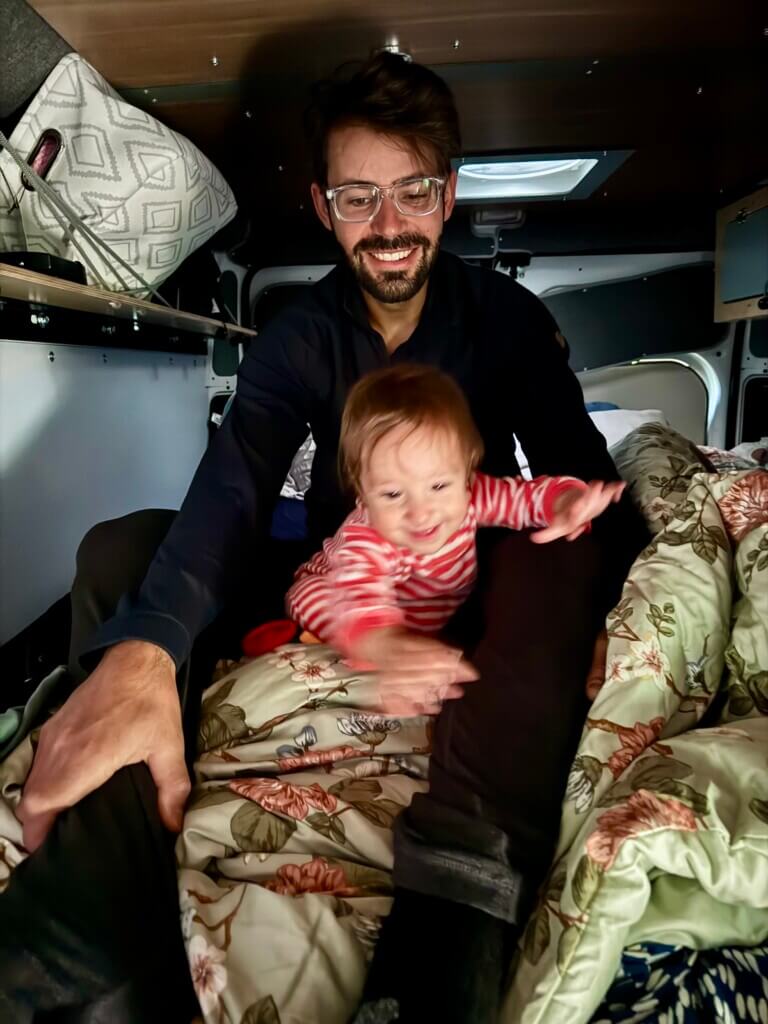
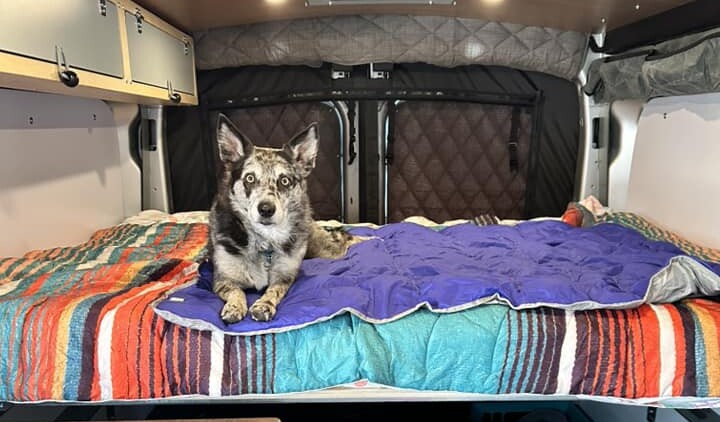
- Set up a safe, familiar sleep situation. The open floorplan of a Wayfarer gives you lots of options for setting up a small pack-and-play, bassinet, or sleeping space. Insulated wearable sleep sacks help keep little ones comfortable at night. Always check with your pediatrician for the latest safe sleep guidelines.
- Pack a first aid kit. Before kids, you could usually tough it out and grab supplies in the next town. With a newborn, that changes fast. Having a thermometer, a baby-specific first-aid kit, and a reliable way to call for help (Garmin inReach, satellite-capable phone, etc.) is worth its weight in gold, especially at 1:00 a.m. in the middle of the woods.
Campfire truth: Parenting a newborn is hard. If everyone is fed and you took at least one deep breath while looking at nature, you’re doing great.
Toddlers (1–3 years)
Camping goal: Make camping feel familiar, and stay flexible. Even if they won’t remember the details, toddlers are soaking up the routines of road trips and life at camp.
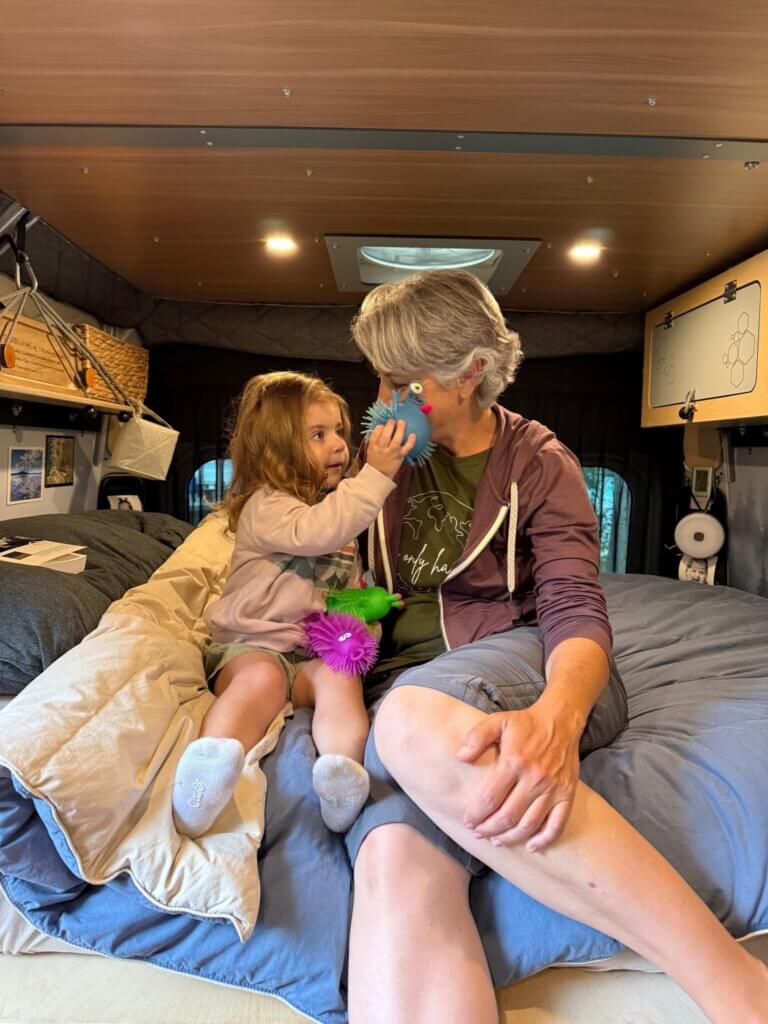
- Try to keep naps and bedtime familiar, even if they don’t look exactly the same as home. If it takes bringing a white noise machine, sleep sack and favorite stuffed animal, it’s worth it for a good night’s sleep.
- Plan your fun adventures around their good windows. And bring a book or other quiet activity to enjoy while they nap. Pro tip – a simple baby monitor can allow you to enjoy some quiet time outside of the van while also keeping an eye on your sleeping tot.
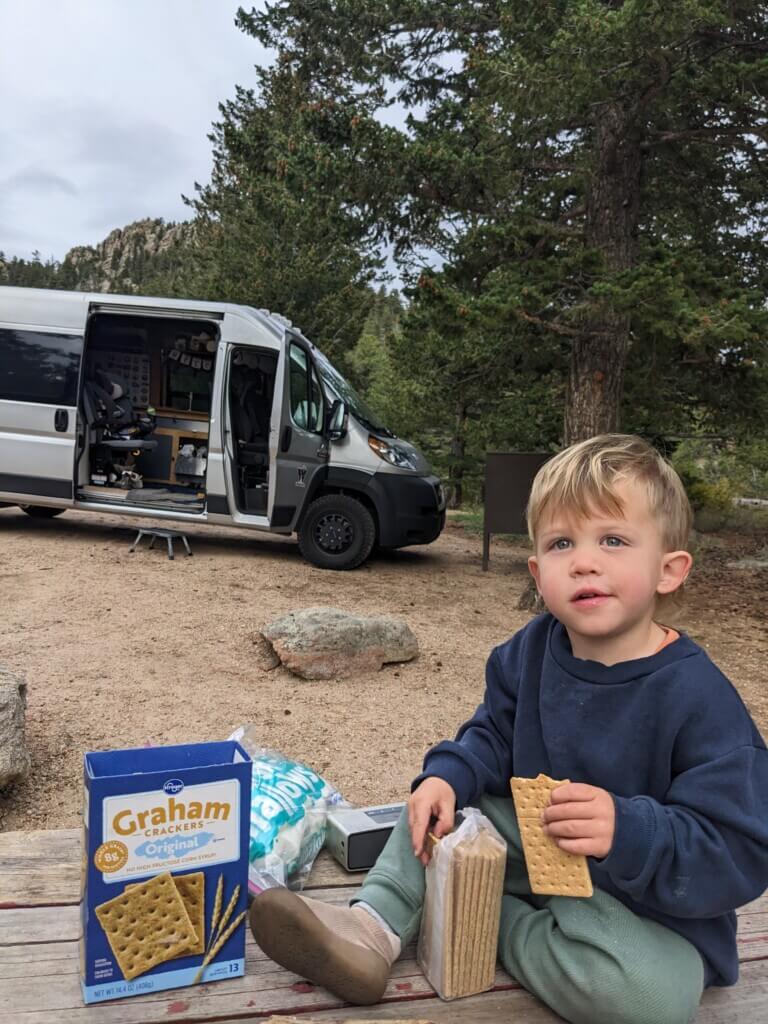
- Snacks. Then more snacks. Then backup snacks.
- If you are in the potty training stage, keep your kid’s travel potty in the same place in the van every time so they know where to find it. Lining the travel potty with a disposable diaper makes cleanup easier.
Preschoolers (3–5 years)
Camping goal: Preschoolers have big imaginations, and camping is less about where you go and more about experiencing it together. Everything is a tiny adventure.
- Give them camp jobs: firewood helper, headlamp checker or water bottle refiller. When they feel included, they feel important.
- Nature walks > hikes. Your little one may not share your excitement for hiking to a specific destination, but at this age bugs, rocks, sticks and flowers are the main attraction.
- Glow sticks after dark are instant magic. Bonus: they also make it much easier to spot a wandering kid once the sun goes down 🙂
- Stick to simple, familiar meals. If they eat nothing but PB&J all weekend, they can catch up on veggies at home later.
Early School Age (6–8 years)
Camping goal: Build confidence. Kids are naturally curious and love exploring how things work. Camping is the perfect place for hands-on learning and letting them try new things.
- Teach small, age-appropriate skills: helping build a fire, reading a map, or setting up their sleeping area. Your kid will have fun and learn along the way.
- Nature still offers the best toys, but you may want to bring bikes, scooters, or balls. The more they move, the more tired they’ll be for bedtime.
- Audiobooks can be a game changer for long drives. Load up a simple device with free library downloads, and your kiddo won’t even realize hours have passed while they are deep in storytime.
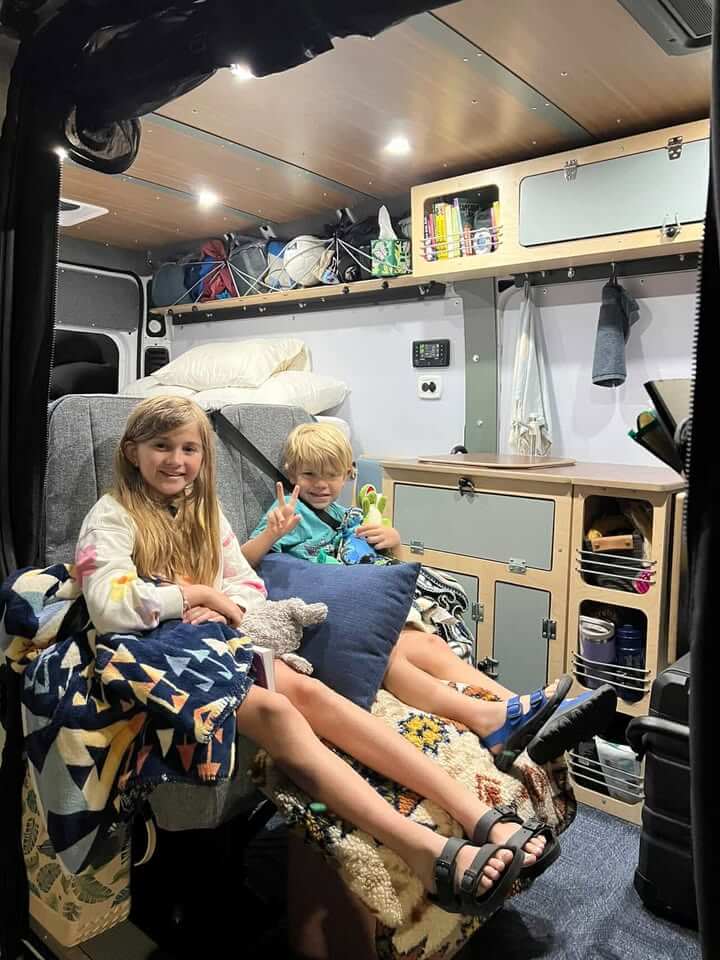
Give them their own bunk. Adding in our lower bunk platform gives your kid a separate sleeping area of their own and a place to wind down with some quiet time.
Big Kids (9–11 years)
Camping goal: This is the age of little explorers with big opinions. Give them space to roam and find their voice.
- Give them a little independence around camp. Walkie talkies are great for letting them explore safely while being able to check in.
- Let them help plan small parts of the trip. Have them choose a hike, a campsite or your next meal. This is also a great chance to learn about the history, geography, flora and fauna of a new place, without it feeling like school.
- Enjoy some unstructured time. Big kids don’t need to be entertained, and a little boredom often turns into creativity.
Early Teens (12–14 years)
Camping goal: Late tweens and early teens want independence, but they’re still figuring out how to use it. Camping works best when they have a say in some parts, without being handed the whole plan.
- You may need to spread out. With growing bodies and emotions, some families find it works well to let their teen set up their own tent next to the van if the campsite allows it. Simple walkie talkies are great for staying in touch with your tent-dwelling teens.
- Invite a friend if you can, it often changes the whole dynamic. Even reluctant campers tend to open up when they get to share the experience with a friend.
- Make it a challenge…a Wayfarer Challenge that is. Have your teen pick a Wayfarer Challenge to work towards and let them track the progress. The challenges make it a game to camp more, and are chock full of ideas for memory-making opportunities.
Late Teens (15–18 years)
Camping goal: See them as partners, not passengers. Shifting your mindset from “packing the kids in the van” to camping with them is going to make everything feel smoother.
- Let them drive the plan, or even drive the van! Let your teen plan a trip from start to finish: choose the destination, research campsites on the Wayfarer App and plan activities. It’s a lot easier for a teen to get excited about a trip when it was their idea.
- Treat them like capable adults, because they almost are. In a year or two, they may be headed out on their own trips with friends, so this is the time to teach them the essential camping skills: how to find a site, use propane safely, cook meals and reserve permits.
- Give them space to do their own thing, and plan a few moments you’ll share together. When normal teen emotions meet an unfamiliar place and a smaller living space, tension can pop up. A little independence goes a long way toward keeping the trip enjoyable for everyone.
Final Campfire Thoughts
Camping with kids isn’t a break from the stress of parenting, but bringing the whole family along is always worth the effort. There will be hard moments, but they tend to fade behind the
memories of s’mores, sunsets and unplanned adventures along the way.
The days are long, but the years are short. Happy adventuring with your family!